
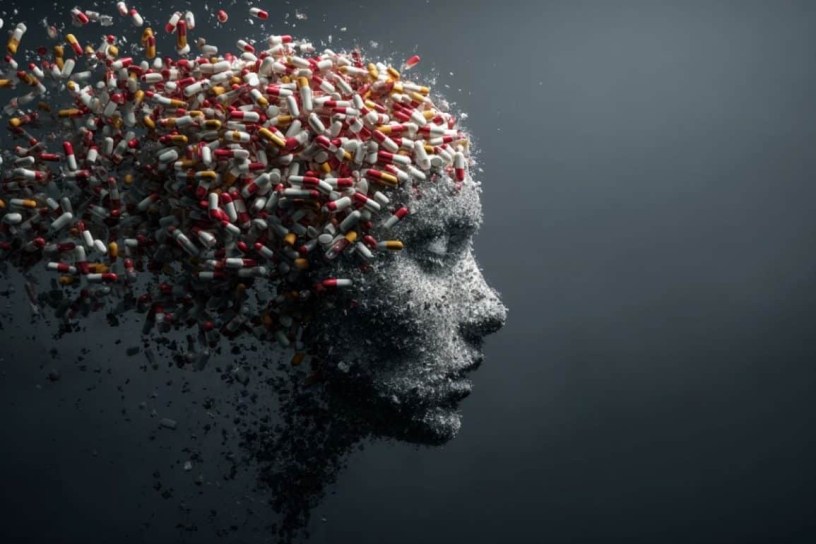
Source: Yale
As depression rates continue to rise globally, researchers are increasingly focused on the need for faster, more effective treatments—particularly for people whose symptoms do not respond to existing medications.
At Yale School of Medicine, decades of neuroscience and psychiatry research converged around an unexpected candidate: ketamine.
In 2000, John Krystal, MD, Robert L. McNeil, Jr. Professor of Translational Research, professor of psychiatry, of neuroscience, and of psychology, and chair of the Department of Psychiatry, reported that ketamine could rapidly alleviate symptoms of major depression—often within hours.
The finding marked the first major advance in depression treatment in decades and opened an entirely new path for antidepressant research.
Who first discovered ketamine?
Ketamine was first synthesized in 1962 by chemist Calvin Stevens at the Parke-Davis Pharmaceutical Company as a derivative of phencyclidine, or PCP, which provided powerful anesthesia but came with long-lasting psychosis and delirium.
Researchers found that while ketamine produced strong dissociative effects, it worked more quickly and safely than PCP. Approved for medical use in 1970, ketamine became widely used as a short-acting anesthetic, including during the Vietnam War for battlefield surgery.
By the 1980s and 1990s, ketamine had moved to the streets and gained notoriety as an illicit drug known as “Special K.” Despite this association, researchers continued to study its effects on the brain, particularly its impact on glutamate, a neurotransmitter essential to learning, memory, and neural communication.
A new scientific direction in depression treatment
In the late 1990s, Krystal began investigating ketamine’s effects while studying schizophrenia. When he turned his attention to depression, the results were striking. Published in 2000, Krystal’s study on ketamine and major depression demonstrated that the drug produced rapid antidepressant effects in people with major depression—often after a single intravenous dose.
This discovery represented a fundamental departure from traditional antidepressants such as selective serotonin reuptake inhibitors (SSRIs), including Prozac and Zoloft, which act on serotonin pathways and typically take weeks to relieve symptoms. Ketamine instead targets the brain’s glutamate system, suggesting an entirely different biological mechanism for treating depression.
Further study by Ronald S. Duman, PhD, a neuroscientist at Yale School of Medicine, revealed that when ketamine triggers the release of glutamate, it stimulates the brain to produce new connections, or synapses, between brain cells.
For people with major depression, these new synapses allowed more positive thoughts and behaviors. Using small doses of ketamine, people with major depression not only found relief, but it happened more quickly than with traditional medications, which can take weeks to show effect. Ketamine took hours.
How did scientists react to ketamine as a treatment for depression?
Despite the promise of these findings, ketamine’s emergence as an antidepressant was initially met with skepticism. Many clinicians and researchers found it difficult to accept that an illicit substance could offer meaningful relief for people to people whose depression had resisted all other treatments.
Over time, however, repeated studies confirmed ketamine’s rapid and robust effects as an effective antidepressant. By around 2010, growing clinical evidence led some physicians to incorporate ketamine into treatment plans for patients with severe, treatment-resistant depression.
How is ketamine used to treat depression today?
Krystal’s work and the studies that followed laid the groundwork for the development of esketamine, a refined form of ketamine designed to retain antidepressant benefits while reducing side effects.
The results of studies on esketamine were remarkable. Clinical trials showed that esketamine was effective even for patients who had not responded to multiple prior treatments. In one major study, 70% of participants experienced improvement, and more than half showed a significant reduction in depressive symptoms within 24 hours.
In 2019, the U.S. Food and Drug Administration approved esketamine—sold under the brand name Spravato and administered as a nasal spray—for treatment-resistant depression. The organization later approved it to treat suicidal ideation and behavior in adults with major depression.
The promise of esketamine does not end there. Because it prompts the brain to build new pathways, esketamine triggers lasting positive changes long after the drug has left patients’ systems.
New research shows that ketamine also holds promise in treating a range of other illnesses that affect the brain. Krystal is part of a team studying whether ketamine may help treat post-traumatic stress disorder (PTSD).
Other Yale scientists are investigating whether it can help depression in those with Parkinson’s disease. Scientists elsewhere are testing whether ketamine helps those with bipolar disorder and chronic stress.
Together, this growing body of work reflects a broader shift in how depression is understood and treated—one that emphasizes rapid-acting therapies, neuroplasticity, and novel brain pathways. What began as an unexpected observation at Yale has reshaped the field of psychiatry, offering new hope to patients and redefining what effective treatment for depression can look like.
Keywords; ketamine, depression

