
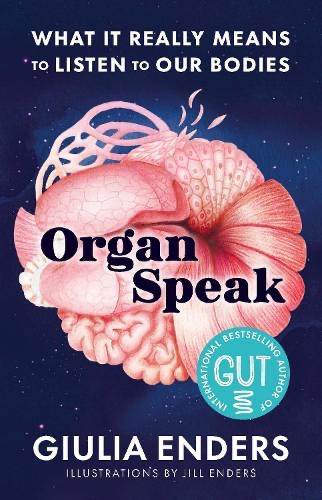
By Guilia Enders
New River Books, 2026,
ISBN-13 : 978-1915780751
MAKE LOVE NOT WAR
Review by Gunnel Minett
When Florence Nightingale taught the world about hygiene in the healing environment, it made us aware that bacteria are bad for us. This was soon picked up by a whole sector of industry that taught us to adopt a war-like approach to bacteria and illness (and the need for us to buy their products to in order to maintain the fight). This book presents a different view. One that is also changing modern medicine. In particular when it comes to ‘combatting illness’. Rather than just plunging into the fight, we should first learn about how the immune system works.
The author takes readers on a journey through our inner landscape, where we meet a number of heroes inhabiting our bodies. She starts with the lungs, and goes through each function of the body and its particular role. Enders starts her explanations at the roots of evolution, before we had fully develop as a species. This approach also conveys a deep sense of unity with nature. The book ends with a chapter on the brain. The reason for this (as she explains) is that the brain is the organ that regulates all the other organs throughout life. We need both the basic and the higher organs to function together to enable thinking and coordination. All in order to maintain a balanced and healthy human being.
Some of the heroes she identifies are (perhaps unexpectedly) bacteria. Even if they can make us ill, they also have many positive roles. We need bacteria to maintain health. When the body has learnt how to deal with harmful bacteria and viruses, it surprisingly doesn’t get rid of them. Remnants of them are stored in a ‘library’ of potential threats to help the immune system to recognise and mobilise defence against them for the future.
Throughout evolution our organs have responded to challenges with remarkable intelligence – both on the physical and psychological level. Understanding how the body is designed can help us learn how to heal both physically and emotionally. The body can teach us what we need to thrive, if only we learn to listen and understand its communication. To understand the origins of emotions is of course also an essential part of psychotherapy. Understanding the body’s communication adds an important extra dimension to healing psychological ill health.
So rather than seeing illness as something that forces us to mobilise for warfare, this book is a gentle story, teaching us to appreciate the miracle of the body we inhabit. One example Enders gives to illustrate how our incredible bodies are is the cost of constructing an organoid. In other words, an ‘artificial’ organ, made out of real cells. She estimates that such a project would cost up to 11 trillion dollars (the same combined value as the 10 largest companies in the world). The truth is also, of course, that, not even with the help of the most sophistical versions of AI, would we be able to build an artificial human being.
The book is filled with similarly positive facts about the body, which makes it ideal as a text book for schools. Understanding how fantastic the evolutionary process and all the living creatures that it has created, should help us think twice before we get involved in activities that are harmful both for ourselves and for the world we live in.
The last paragraph of the book sums it up very well: “How would relationships change if we regulated them not only with churches, conventions and laws, but also with approaches used by the skin? Can a society get out of balance and become ‘sick’? How would its ‘healing’ work? An answer from the body should never be the only one. Nor should we ever completely forget the body when looking for answers. It’s the reason we exist and why we keep orienting ourselves to its needs. This is what we breathing, attentive, loving, hardworking beings are based on. Intertwined, millions of years old and reborn time and again.” [p284]
New River Books, 2026, ISBN-13 : 978-1915780751

