
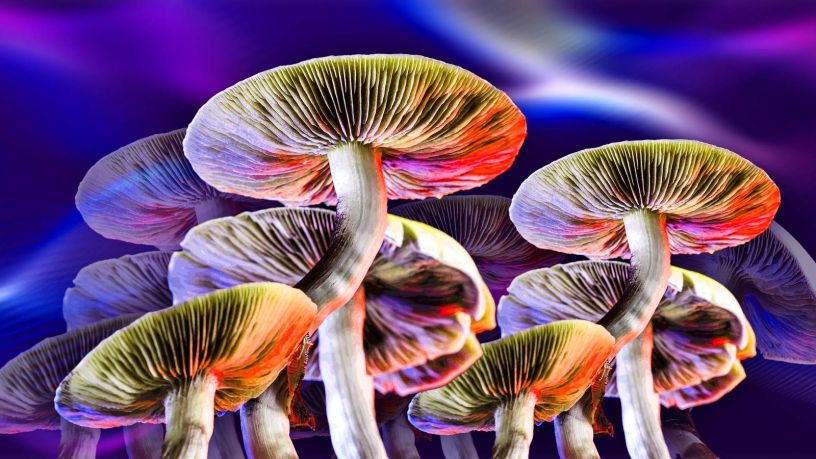
Source: University of California, Santa Cruz
Psilocybin, the active psychoactive compound found in Psilocybe mushrooms, has emerged as a cornerstone of the modern psychedelic renaissance. Recognized as a potent “psychoplastogen”, a molecule capable of stimulating rapid structural and functional neural plasticity after an isolated dose, psilocybin has earned Breakthrough Therapy designation from the U.S. Food and Drug Administration (FDA) for treatment-resistant depression and major depressive disorder.
Yet, despite clinical trials demonstrating rapid and durable antidepressant outcomes, the fundamental cellular mechanics governing how psilocybin repairs circuits in living mammalian brains have remained unresolved. Furthermore, neuroscientists and pharmacologists have long debated whether the acute psychedelic “trip” is an indispensable biological requirement for lasting clinical recovery.
Now, a study led by researchers at the University of California, Santa Cruz (UCSC), published in the journal Nature Neuroscience, maps the exact structural timeline of psilocybin-induced plasticity and demonstrates that structural healing can be genetically decoupled from hallucinogenic activity.
Tracking Dendritic Spines in the Living Brain
To observe structural remodeling at high resolution, the research team employed in vivo two-photon microscopy to track individual dendritic spines, the tiny receiving docks where neurons establish synaptic communication, along cortical neurons in living mice over several weeks.
Within 24 hours of psilocybin administration, researchers observed a pronounced surge in de novo dendritic spine growth. Beyond driving spine density, psilocybin accelerated the physical maturation of these new synaptic junctions.
While newly formed spines typically begin as short-lived, structurally unstable “stubby” protrusions, psilocybin prompted a high percentage to rapidly morph into large “mushroom” spines. These bulbous, structurally mature spines are packed with scaffolding proteins and AMPA neurotransmitter receptors, providing the physical substrate for resilient, enduring memory and affective stability.
“These newly formed connections can integrate into existing neural circuitry and persist over time, leaving a lasting structural trace of psilocybin’s effects on the brain,” said lead author Jacob Baker, a doctoral researcher in molecular, cell, and developmental biology at UC Santa Cruz.
Circuit Healing Depends on Prior Stress
A primary breakthrough of the study is that psilocybin does not simply flood the cortex with indiscriminate connections; rather, its action is state-dependent, calibrated to the brain’s baseline microenvironment.
In healthy control mice, the compound induced a temporary increase in spine formation coupled with the pruning of pre-existing connections over three weeks, maintaining homeostatic structural equilibrium.
However, in mice exposed to chronic unpredictable mild stress, a standardized model mirroring human depressive pathology and synaptic atrophy, psilocybin behaved differently:
- Amplified Spine Genesis: Stressed neural circuits exhibited an even larger surge of new dendritic spines than unstressed controls.
- Halted Synaptic Atrophy: The drug actively blocked the ongoing pathological loss of existing synapses, reversing the anatomical degeneration caused by chronic stress.
“These findings challenge the prevailing view that psilocybin simply increases neural connectivity and suggest that its effects depend on the brain’s underlying condition,” said senior author Yi Zuo, PhD, professor of molecular, cell, and developmental biology at UC Santa Cruz. “This provides a new perspective on how psychedelics might help restore neural circuits disrupted by stress, with potentially important implications for understanding their therapeutic effects in depression and other psychiatric disorders.”
Decoupling Rewiring From the Psychedelic State
To test whether the intense perceptual alterations characteristic of psychedelics are biologically mandatory for structural plasticity, the team focused on serotonin 2A receptors (5-HT2ARs) within Layer 5 pyramidal neurons—the primary computational output cells of the cerebral cortex.
Through targeted genetic manipulations, the investigators uncovered a definitive double dissociation:
- Plasticity Without Hallucination: When 5-HT2A receptors were restored selectively to Layer 5 pyramidal neurons, psilocybin triggered robust dendritic spine formation and structural maturation. However, these mice displayed zero head-twitch responses, the gold-standard behavioral marker for psychedelic hallucinations in rodents.
- Hallucination Without Plasticity: Conversely, when 5-HT2A receptors were deleted specifically from Layer 5 pyramidal neurons, psilocybin failed to stimulate any synaptic remodeling, yet the head-twitch behavior remained fully intact.
This confirms that the signaling pathways driving therapeutic structural neuroplasticity are anatomically and mechanistically distinct from those generating hallucinogenic subjective states.
Blueprints for Next-Generation Neurotherapeutics
The discovery arrives as regulatory bodies worldwide prepare for the integration of psychedelic medicine. Last month, the FDA convened a landmark public hearing evaluating Risk Evaluation and Mitigation Strategy (REMS) frameworks and clinical trial standardization for psychedelic therapies, where logistical constraints, such as requiring two trained clinicians for eight continuous hours per dosing session, represent a major scalability bottleneck.
By pinpointing the exact cortical subpopulation driving structural repair, the UCSC team’s findings provide a concrete molecular roadmap for designing non-hallucinogenic psychoplastogen analogs. Such next-generation compounds could stimulate rapid synaptic regeneration and alleviate treatment-resistant depression in outpatient settings without inducing dissociative or hallucinogenic side effects.
Keywords; neurotech, schizophrenia

