
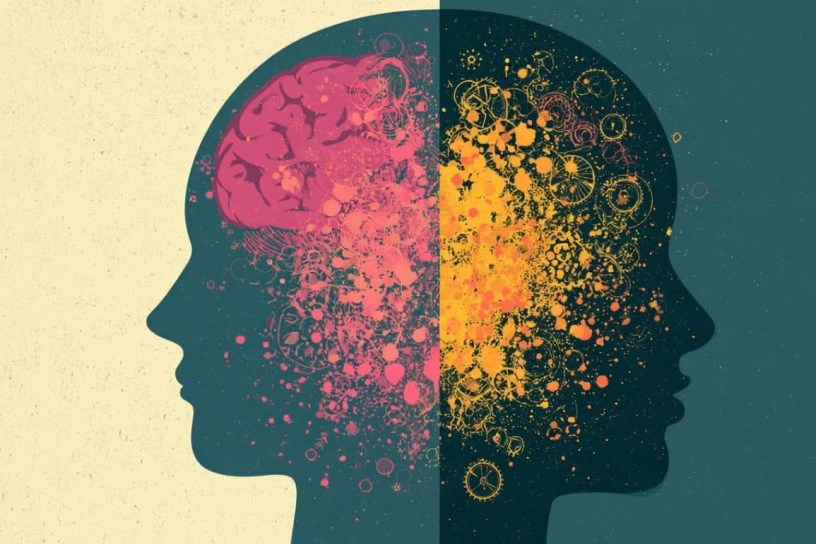
Source: Aalto University
A sense of personal superiority, entitlement, and a persistent drive to command social attention are hallmarks of narcissistic personality traits. While subclinical narcissism exists along a spectrum throughout the general population, individuals who score high in “grandiose narcissism” frequently encounter interpersonal friction, emotional detachment, and volatile relationships.
Historically, cognitive neuroscience investigations into narcissism relied on controlled, static laboratory cues—such as isolated photographs of emotional facial expressions or simple pain stimuli. However, these paradigms fail to capture how narcissistic individuals spontaneously navigate the intricate, shifting dynamics of everyday social life.
Now, a multi-university neuroimaging initiative titled the Faces of Narcissism project, led by researchers at Aalto University in Finland, has examined how grandiose narcissism shapes neural responses in dynamic, real-life social encounters.
Publishing their findings using functional magnetic resonance imaging (fMRI), the team discovered that people with elevated narcissistic traits fail to synchronize their brain activity with others during moments of vicarious social vulnerability and embarrassment.
Testing Goffman’s “Facework” in the Scanner
The research team designed a naturalistic experimental framework drawing on the sociological frameworks of Erving Goffman. In the 1950s, Goffman posited that human social interactions rely on “facework”—a collaborative, unspoken effort where participants actively protect both their own and each other’s public self-worth, or “face.” When an individual’s self-image is threatened or undermined, it typically elicits a shared, vicarious wave of embarrassment and discomfort in observers.
To simulate these social stakes, the investigators recruited 58 participants selected from an initial psychometric screening pool of nearly 1,000 adults. The cohort was split between individuals scoring exceptionally high in grandiose narcissistic traits and a matched control group displaying low narcissistic features.
Inside the fMRI scanner, participants watched naturalistic video vignettes of professional actors narrating deeply personal autobiographical stories involving social exclusion or public admiration.
Following each narrative, the storyteller received critical, face-threatening feedback from another conversational partner. For instance, the feedback questioned whether previous admiration was undeserved, or asserted that past social rejection was entirely the storyteller’s own fault. Crucially, participants were given no instructions to empathize, allowing researchers to track unprompted, spontaneous neural processing.
Neural Dissimilarity and the Empathy Gap
When low-narcissism control subjects observed the storyteller face social threat, their brain activity became highly synchronized. Functional scans revealed consistent, shared neural activation patterns across cortical networks implicated in cognitive empathy, theory of mind, and the interpretation of social contexts. This inter-subject synchronization indicates that typical observers intuitively share and process the emotional discomfort of another person losing face.
In contrast, participants with high narcissistic traits displayed marked neural divergence. Their brain patterns were far less in sync with one another, showing distinct and idiosyncratic neural responses to the victim’s social vulnerability.
“People with a high number of narcissistic traits respond to another person’s vulnerable experience differently than others,” explains doctoral researcher Matias Piispanen of Aalto University. “They may attune to interaction in a different way, pay attention to different aspects of it, or make different interpretations of what is happening.”
The divergence localized to regions responsible for evaluating social meaning rather than basic emotional reactivity, suggesting that individuals with grandiose narcissism perceive social power dynamics differently, perhaps viewing another’s vulnerability through a lens of judgment, contempt, or detachment rather than shared human discomfort.
The Real-World Consequences of Social Misattunement
The findings provide a neurological explanation for why individuals high in narcissism struggle to forge durable, authentic interpersonal bonds.
Because cooperative social cohesion relies on an intuitive, shared neural appraisal of vulnerability and embarrassment, an inability to naturally attune to another’s distress leaves narcissistic individuals out of step with everyday social reciprocity.
“People with a high level of narcissistic traits may not necessarily build supportive or genuine connections with others, which can lead to difficulties and misunderstandings in interaction,” Piispanen notes.
By shifting beyond static emotional stimuli into rich, real-world narrative interactions, the Faces of Narcissism project demonstrates that grandiose narcissism alters the fundamental cognitive lens through which human social vulnerability is perceived, processed, and evaluated.
Keywords; social neuroscience, behavior

