
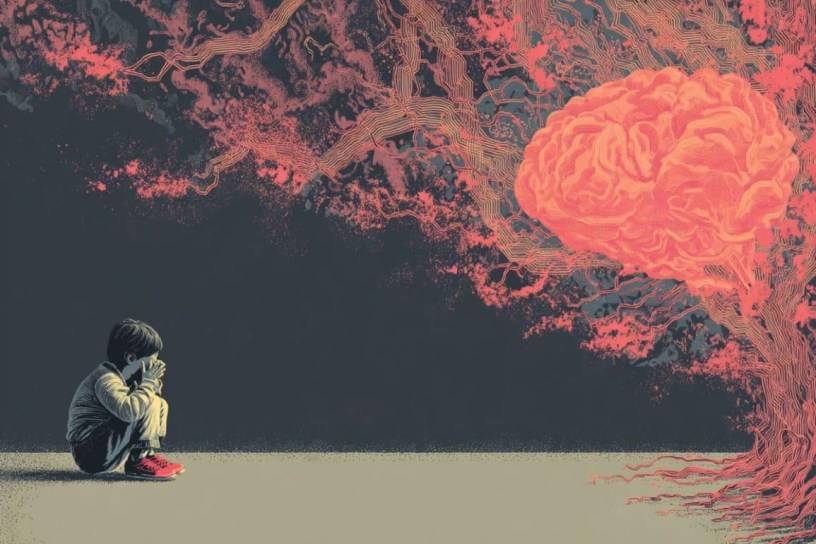
Source: KeAi Communications
Childhood maltreatment is known to exert long-lasting impacts on physical and mental health, yet the underlying biological pathways remain poorly understood.
A new study published in Brain Science and Child Development sheds light on how adverse experiences in early life become “embodied” by altering interactions between fear-related brain function and systemic inflammation.
The researchers of the study, from Guangzhou University, investigated how the type and timing of childhood maltreatment shape the link between brain activity during fear learning and two key inflammatory markers, interleukin-8 (IL-8) and interleukin-17 (IL-17).
“We included 128 young adults who completed retrospective reports of childhood abuse and neglect, divided into early (ages 1-11) and late (ages 12-18) periods,” shares corresponding author Jianjun Zhu. “Brain function was measured using functional magnetic resonance imaging (fMRI) during a fear conditioning task.”
The results showed that childhood maltreatment does not simply affect the brain or inflammation alone—it modulates how they connect.
“Early abuse significantly altered the relationship between amygdala activity and IL-8 levels, while late neglect shaped the link between ventromedial prefrontal cortex (vmPFC) activation and IL-8,” explains Zhu. “Early neglect also modified connectivity between the amygdala and vmPFC, as well as between the hippocampus and vmPFC, in relation to IL-17 levels.”
The team’s findings highlight a critical insight: the timing and type of childhood adversity matter greatly. Abuse during early childhood impacts threat-related brain regions that mature earlier, whereas neglect in later adolescence affects regulatory brain areas that develop more slowly.
According to the researchers, this study provides the first evidence that childhood maltreatment adjusts the communication between the brain’s fear circuitry and the immune system.
“By revealing how early adversity remodels neuro-immune interactions, our findings explain why people with a history of childhood trauma face higher risks of long-term physical and psychological health problems,” says Zhu.
Further, the results may support the development of more targeted interventions that address both neural and immune components of trauma-related disorders.
Keywords; childhood trauma, neuroscience

