
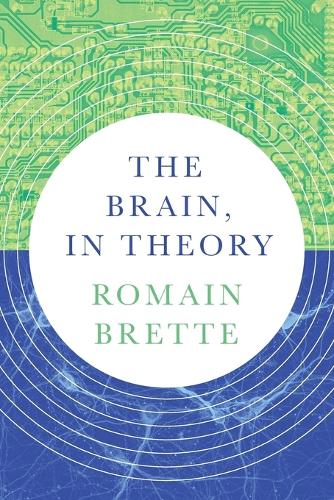
By Romaine Brette
HOW MUCH DO WE UNDERSTAND ABOUT BRAINS?
Review by Gunnel Minett
Throughout history, the brain, with its essential role for all human activity, has been compared to various technological advances. Today’s mainstream theories of the brain are often based on engineering concepts. They include terms such as computation, code, control, reverse-engineering and optimisation. Humans are described in ways that resemble a machine, with the brain as a computer.
In this book, Romain Brette offers a systematic analysis as to why the biological computer model of the brain is wrong. Living organisms are not engineered, they evolve. Unlike engineering, evolution has no predetermined goals, plans, or knowledge, even if, superficially, it may seem like it. Instead of an optimised machine, we should understand the nervous system as a self-organising, continuously developing community of living cells. A, living brain, Brette argues, actively anticipates and interacts with its environment via a physical, biological body, rather than being a computer that simply computes representations.
Engineering metaphors can be useful in some areas. In others they can be vague, incoherent and misleading, for the simple reason that real brains are not engineered. Brains are not programmable machines. Neurones don’t follow fixed rules and don’t simply compute. Nor is neural activity a code. So although it can seem as if the mind is a kind of software running on neural hardware, acting like a computing device, this is not the case. It suggests that all mental capacity is merely a series of calculations. This is an incorrect anthropomorphic projection, where scientists conflate the tools they use to study nature with nature itself.
This deconstruction of the predominant model of the brain, which treats it like a computer, has become even more important in the light of the development of AI. In particular this applies to areas where AI developers are claiming that it can be used to deal with problems related to the human psyche and our general wellbeing. One such example are the efforts of tech companies to take over the running of health care in various countries.
To recognise the difference between humans and machines is essential for our wellbeing. It may be an attractive idea to hand over the care of human beings to artificial intelligence. Computers do not go on strike, or make mistakes due to over-work. And, as Alan Turing illustrated in the early days of computers, talking to a computer which is always friendly and willing to listen, can be a positive thing. But before we hand over health care to computers we need to be absolutely clear as to the difference between the human brain and the computer. And this is exactly what this book is all about.
Princeton University Press 2026, 293pp ISBN-13 : 978-0691281384

