
What moments of insight have in common
By Sam Dresser, Psyche.co
What is an ‘insight’? They tend to be thought of as moments of realisation in which all the discombobulated pieces suddenly snap into place and a fresh coherence emerges. These can be high stakes or low; usage of the word stretches from the quotidian to the earth-shattering. Understanding why a friend of mine is habitually late is an ‘insight’ – but so too are epochal revolutions in thinking, those storied moments when great minds reveal hidden connections.
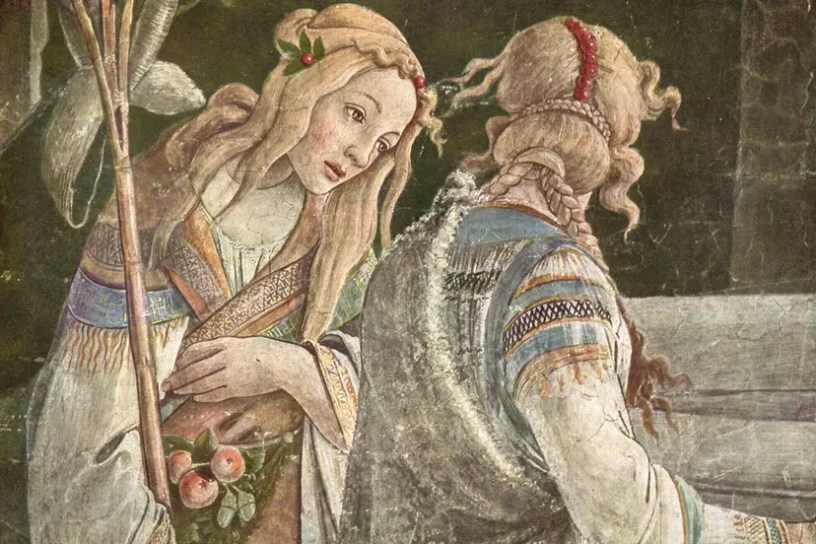
One of the most tragic and romantic insights I’ve read is in Marcel Proust’s novel In Search of Lost Time (1913-27), when Charles Swann sees in the face of the courtesan Odette the unspeakably beautiful Botticelli painting of Zipporah, whose ‘similarity enhanced her beauty also, and rendered her more precious’. On the basis of this insight – that Odette is as beguiling as any immortal artwork – Swann falls desperately in love. But this later leads to another, more brutal insight: that he never fell in love with Odette herself, but only her artistic likeness. Such, in Proust’s cynical suggestion, is often the nature of love.
Reflecting on scientific insights, the physicist John Ziman wrote that they depend on finding the similarities between different things: ‘the random configuration of the long chain of atoms in a polymer molecule is “like” the motion of a drunkard across a village green.’ This is a stimulating insight about insights, which also sheds light on Swann’s insight: though they can involve many kinds of perspective shifts, the common denominator is that we notice likenesses where before we saw none – and from that new connection, we see new meaning. But an insight, however invigorating, may always prove to be less than we had hoped: Swann saw a likeness, and that was an insight that cost him everything.
Keywords; insight, psychology

